











Webinar Playback
Capillary electrophoresis STR analysis has been a core part of forensic DNA profiling for decades, and it continues to grow. In this free 30-minute webinar, Dr Teresa Snyder-Leiby, a veteran molecular researcher with over 30 years of experience, walks through the common pain points forensic labs face today and how the latest features in GeneMarker® HID directly address them.
Click here to watch the full 30-minute webinar
Why Does CE STR Analysis Still Matter?
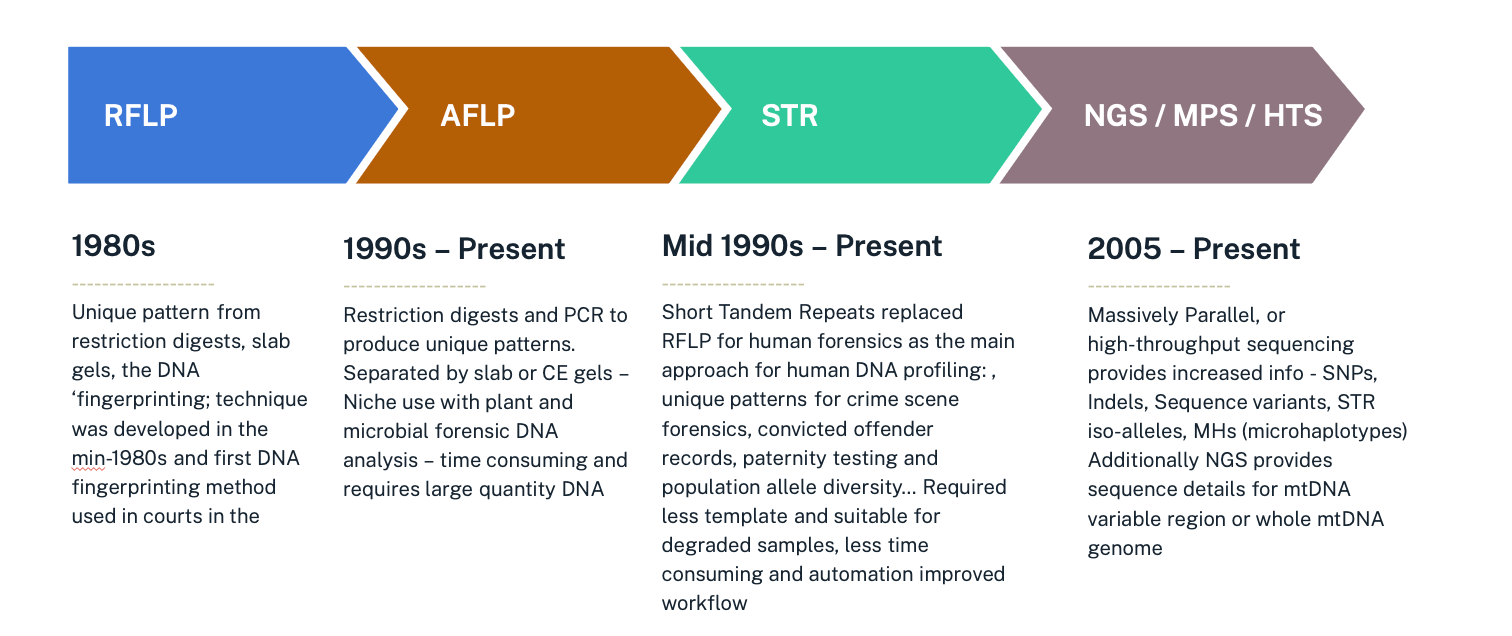
While NGS/MPS technologies are gaining traction in forensic research, CE STR analysis remains the gold standard for human DNA profiling. It's fast, cost-effective, and validated in forensic laboratories worldwide. CODIS, established by the FBI in 1989, holds decades of STR genotype entries that are essential for crime scene investigations, convicted offender searches, and missing persons cases. Any new sequencing method still needs to report sequence variant genotypes in length-based alleles to remain consistent with those CODIS entries.
Where Do Labs Struggle Today?

Even with CE STR as the established technique, there are real pain points in day-to-day data analysis. The webinar identifies four key problem areas:
Validation assistance
Determining analytical thresholds, expected stutter ranges, allele balance, and migration precision are all time-consuming processes that must be completed during validation and before casework.
Stutter and pull-up
These artifacts can result in missed or miscalled alleles. Labs also need to export results with and without stutter peaks for downstream probabilistic genotyping (PG) software such as STRmix or MaSTR.
Batch normalization
CE drift, whether on the same instrument over time or across different instruments, can cause inconsistencies in panel calibration.
8-dye .fsa file compatibility
Newer CE instruments and PCR kits with 8-dye capability require software support for the additional dye channels.
What's New in GeneMarker® HID?
The webinar covers updates across four areas:
-
Validation assistance tools
-
Stutter filters
-
Batch plate processing
-
8-dye compatibility.
Validation Assistance Tools
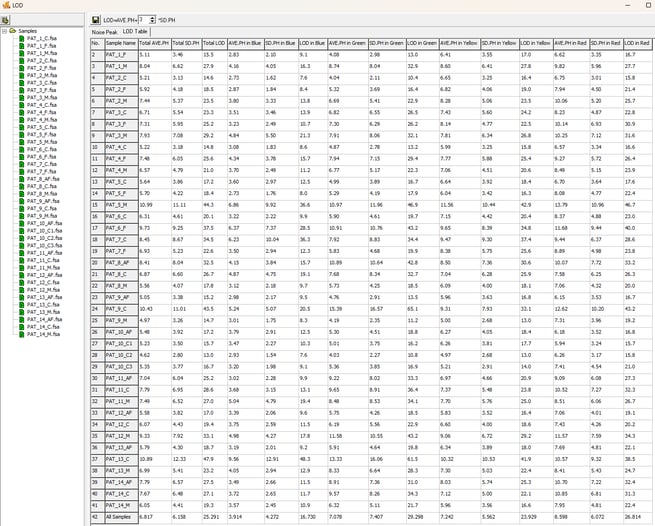
Streamlined Limit of Detection (LOD) Table
The updated analytical threshold tool removes the many manual steps of previous methods, increasing accuracy and reproducibility. It automatically excludes alleles and artifacts from noise calculations, and provides analytical threshold values per dye, per marker, or as an overall average, all from a simple drop-down menu. Because peak heights and noise levels can be affected by variables like DNA quantity and injection time, this tool allows reliable fine-tuning of the analytical threshold for specific SOPs.
Automated Stutter Detection
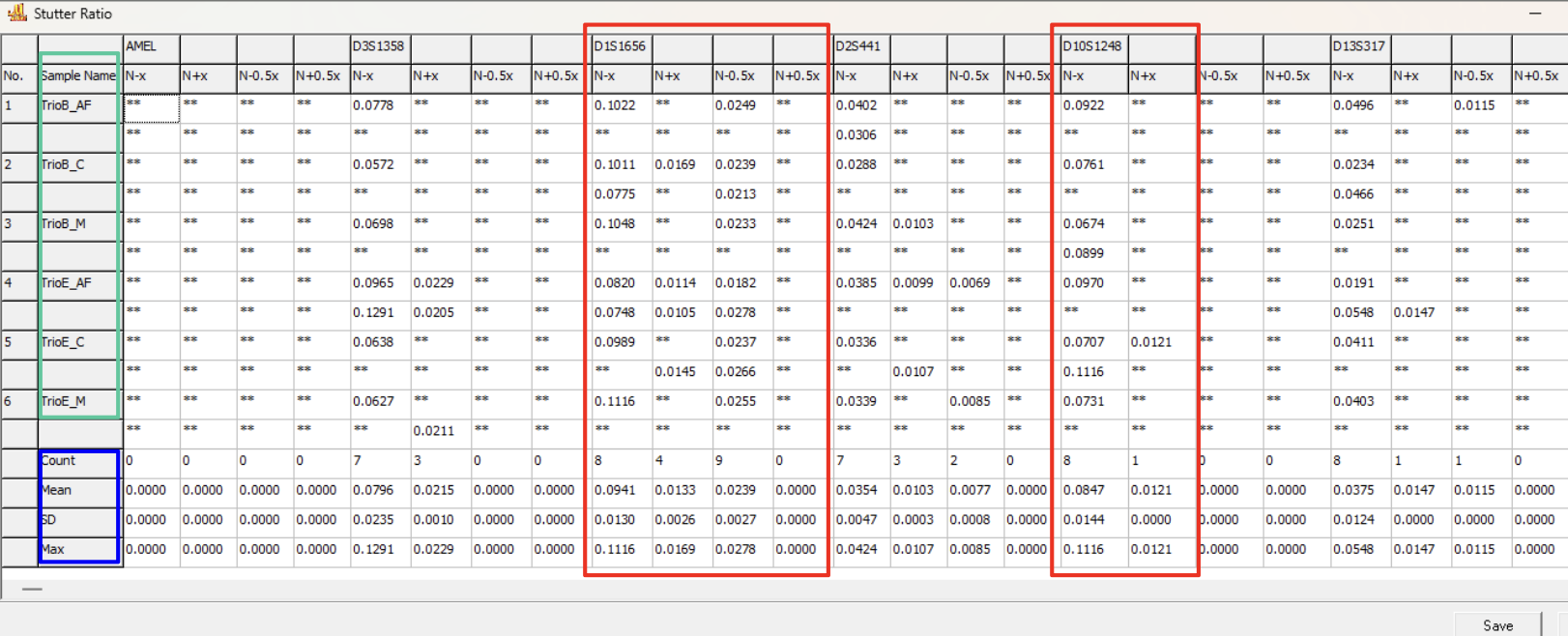
Previously, determining stutter ranges for each locus required tedious manual edits. The new embedded stutter validation tool receives allele calls and peak heights directly from the main analysis screen and displays results, including RFU, mean, standard deviation, and max for each stutter position and each marker. Peaks in additive stutter positions are excluded from averages to avoid skewing individual position results.
Heterozygous Imbalance Analysis
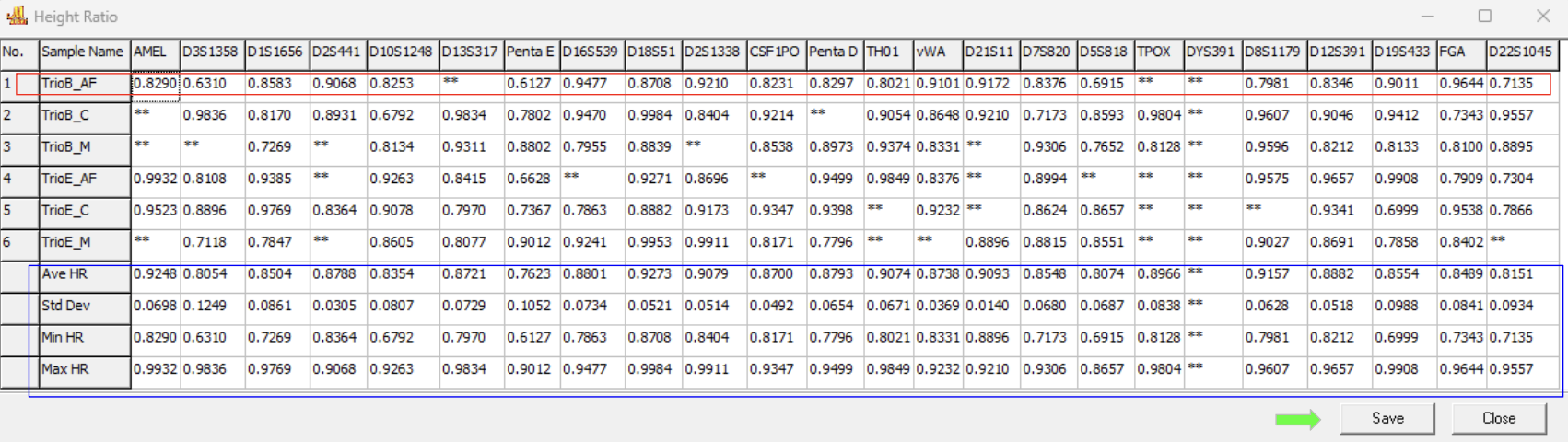
The new height ratio tool automates the export of peak height ratios and summary statistics across all markers and samples. Results are displayed per file instantly, with homozygous markers flagged automatically. No manual export to macros is required.
Allelic Ladder Migration Precision
Monitoring migration precision of allelic ladders ensures accurate, reproducible, and standardized genotyping across different instruments, operators, and labs. The tool instantly displays average migration, standard deviation per allele, and standard deviation per marker for all ladders in a project.

Stutter Filters
N-2 Repeat Position Added to Allele-Specific Stutter Filters
GeneMarker® HID has supported allele-specific stutter filters since around 2020. Version 3.3 adds the N-2 repeat position to those filters, a feature requested by many labs to obtain more detailed information from complex mixture samples. Allele-specific stutter filters offer more accurate stutter identification than traditional marker-wide filters, with better discrimination between true alleles and stutter in complex mixtures and fewer missed minor contributor alleles.
Report Toggle: Export With and Without Stutter
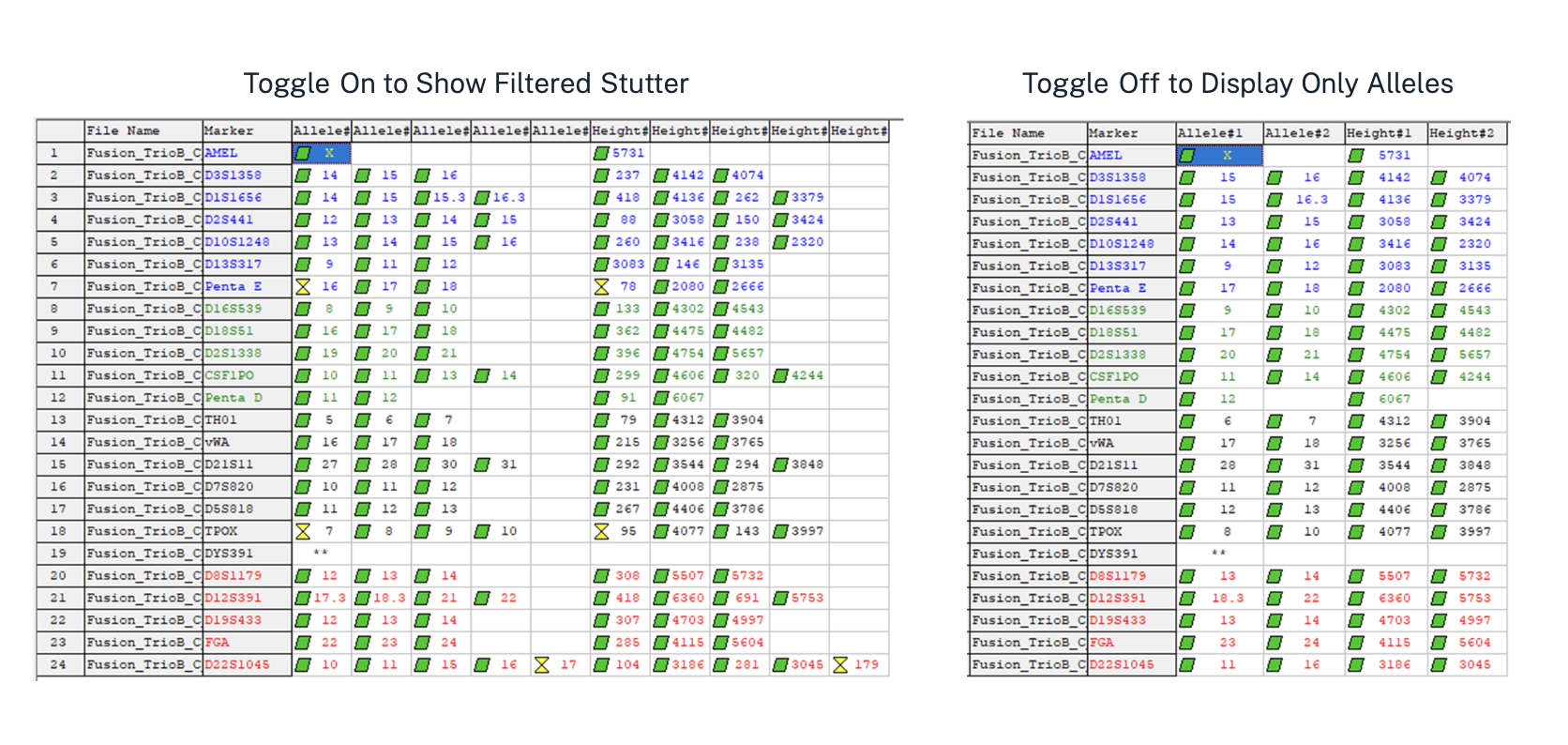
A new checkbox in report settings allows analysts to perform a single review and then export two versions of the allele report table - one with alleles and heights only, and one that includes stutter peaks and their heights. All analyst edits, comments, and deletions are maintained when toggling between the two views. This is particularly useful for labs sending data to PG software for model development or calibration.
Batch Normalization & Auto Ladder Selection
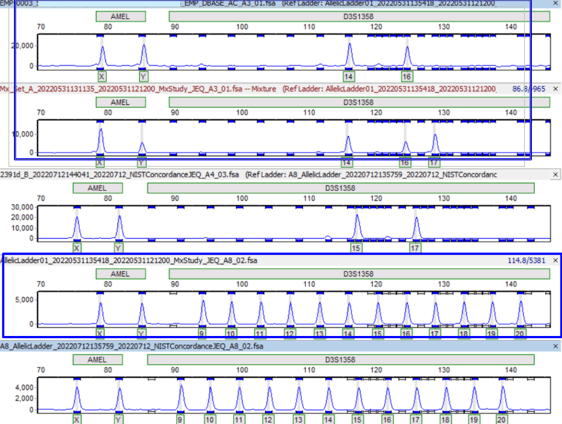
The auto-select best ladder function paired with Auto Panel Adjust has been a core efficiency feature in GeneMarker® HID for years. Rather than averaging ladders, the software evaluates each allelic ladder for quality, then matches each sample to the ladder that best fits its migration pattern. This significantly reduces out-of-bin and off-ladder calls during batch processing and decreases the need for analyst intervention, particularly valuable for high-volume casework.
8-Dye Chemistry Compatibility
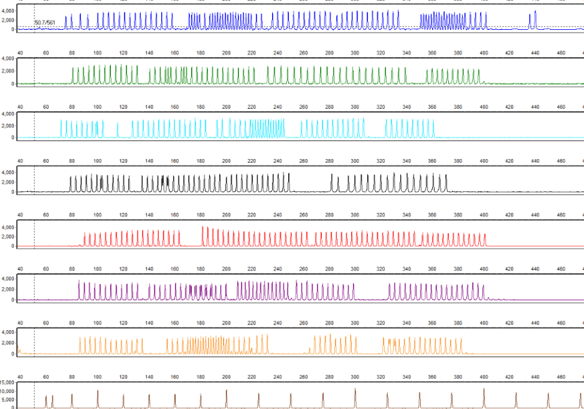
GeneMarker® HID now supports .fsa files from 8-dye CE instruments and PCR kits. All features available for 4- to 6-dye data are also available for 8-dye data, including contamination check, percent same genotype database search, relationship testing, kinship analysis, missing persons database search ranked by likelihood ratio, and two-person semi-continuous mixture analysis. The additional dye channels enable analysis of more loci, particularly in the lower molecular weight range, making results less impacted by DNA degradation.
Get Started with SoftGenetics
Sign up to start your free 35-day trial! No credit card, no commitment required.
Start your free 35-day trial now.